1. The Raw Charm of Albania.
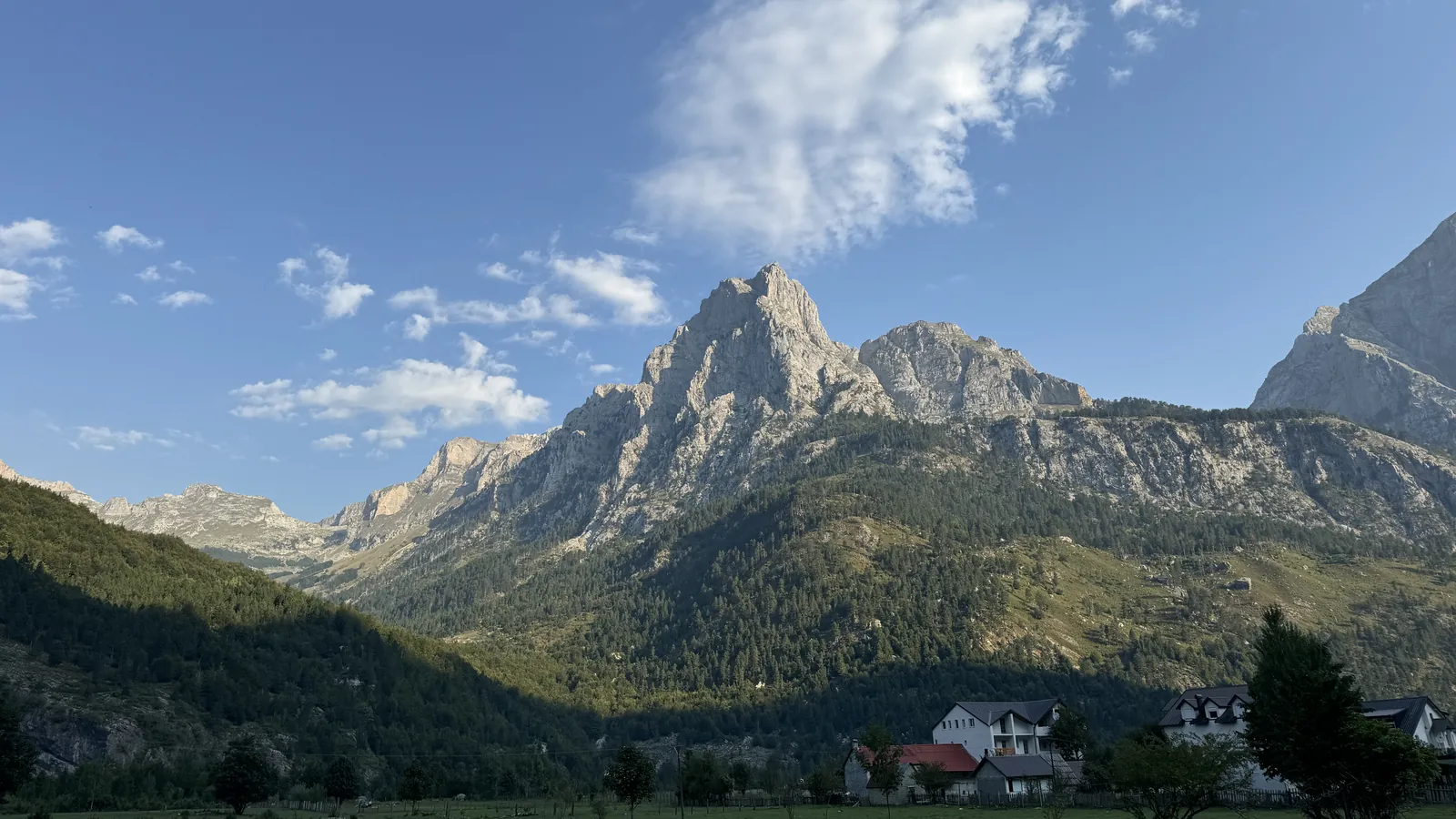
During my two-year Master’s journey in Europe, I explored several countries from my base in Hungary. Albania stood out as one of the most raw and rewarding. It sits on the Balkan Peninsula between the Adriatic and Ionian seas, and its dramatic mountain geography is why it is often called “the Switzerland of the Balkans.” Tourism there is still light compared with the big European destinations.
In my personal view, Albania’s infrastructure is noticeably less developed than Western Europe’s, and in some transit aspects even less structured than Vietnam’s. That unpolished character is exactly what keeps its charm. It suits budget-conscious travellers, hikers, and anyone who prefers rugged, authentic landscapes over polished resorts.
I started in the capital, Tirana. The airport is compact, but the city center bursts with painted buildings, historical monuments and evening energy. Even past 10 PM, cafes and local eateries stay full of residents out for a stroll around Skanderbeg Square and the Grand Park.
My trip lasted about a week in the first days of September 2024, running from Tirana to Komani Lake and the Valbona–Theth trek in the north, then south to Himarë on the coast.
2. Travel Tips: Transit, Cash & My Roaming Mistake.
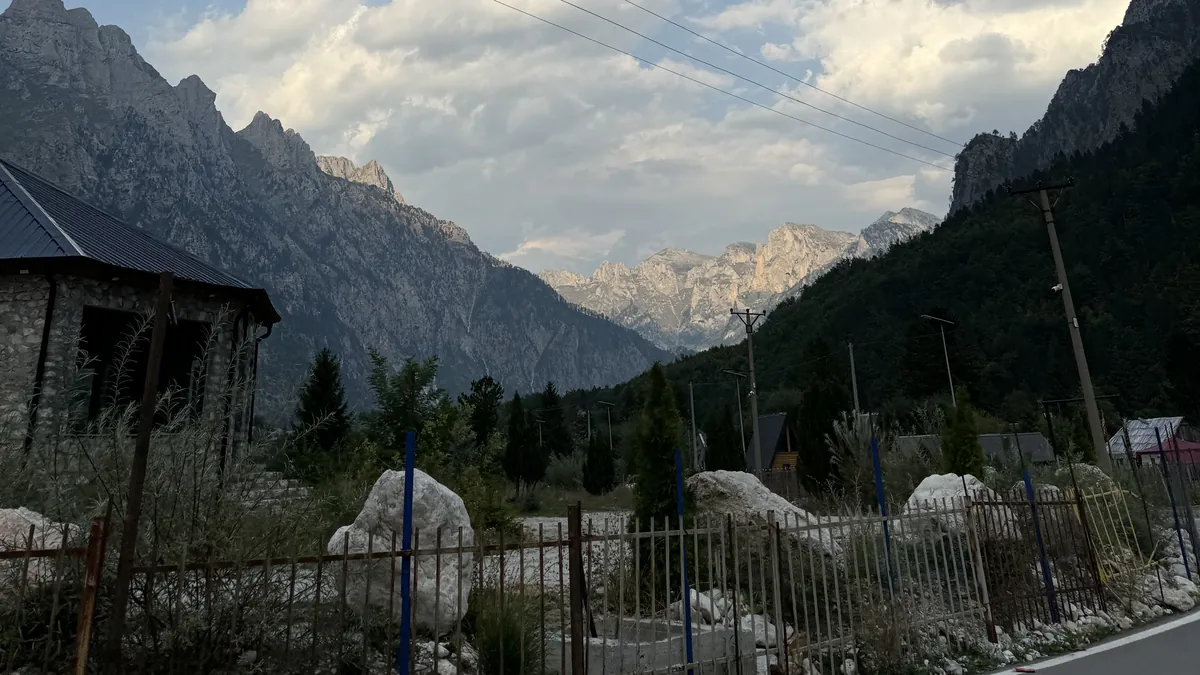
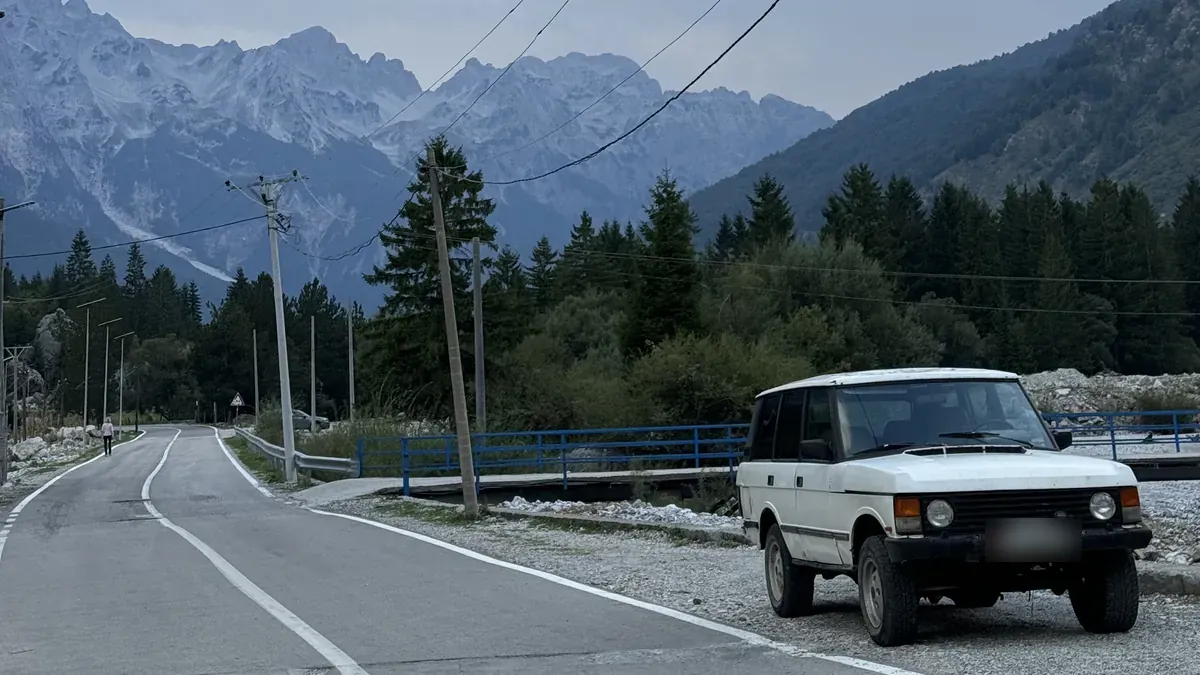
Traveling in Albania takes flexibility. In my experience, public transit runs on informal schedules, and I did not find one central bus terminal in the larger cities. Buses to smaller mountain villages can be as rare as once a day. We did not want to pay for an expensive private car, so we tried hitchhiking instead and, touch wood, kind locals picked us up and got us where we were going. It turned into one of the more fun and heartwarming parts of the trip.
My costly data mistake
Albania is outside the EU, and when I traveled in 2024 the EU roaming rules did not cover it. I assumed my Hungarian SIM would work as it does across the EU, used mobile data casually on day one, and received a bill of more than 20,000 Hungarian forints (roughly 50 EUR). The EU has since proposed opening negotiations to extend “Roam Like at Home” to Western Balkan countries, including Albania. A local eSIM or SIM from Tirana airport would have saved me that bill.
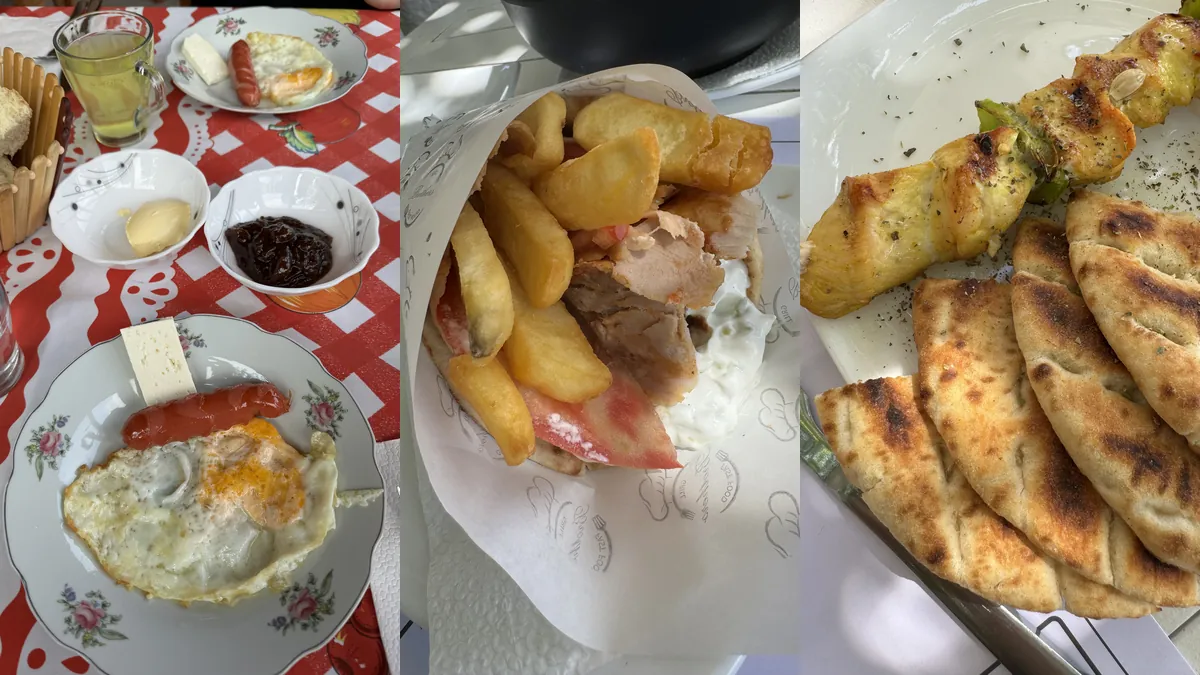
Money is simple: cash is king. Major hotels in Tirana accept cards, but in my experience local bakeries, minibuses and mountain guesthouses were cash-only (Albanian lek or euros). I stuck with bottled water throughout.
Quick checklist before you go:
-
•
Mobile data: my Hungarian EU SIM was not covered in Albania in 2024; a local SIM or eSIM from Tirana airport is the alternative.
-
•
Cash: lek or euros for bakeries, minibuses and mountain guesthouses; cards worked at major hotels in Tirana.
-
•
Transit: informal schedules, no central bus terminal that I found, and mountain buses as rare as once a day.
-
•
Water: I stuck with bottled water.
3. The Highlight: Trekking Valbona to Theth Across the Albanian Alps.
The highlight of the trip was the famous trek connecting the remote villages of Valbona and Theth. To reach the trailhead, I took a 2.5-hour ferry across Lake Komani, a dramatic passage cutting through the Accursed Mountains, followed by a winding mountain bus ride into Valbona Valley.
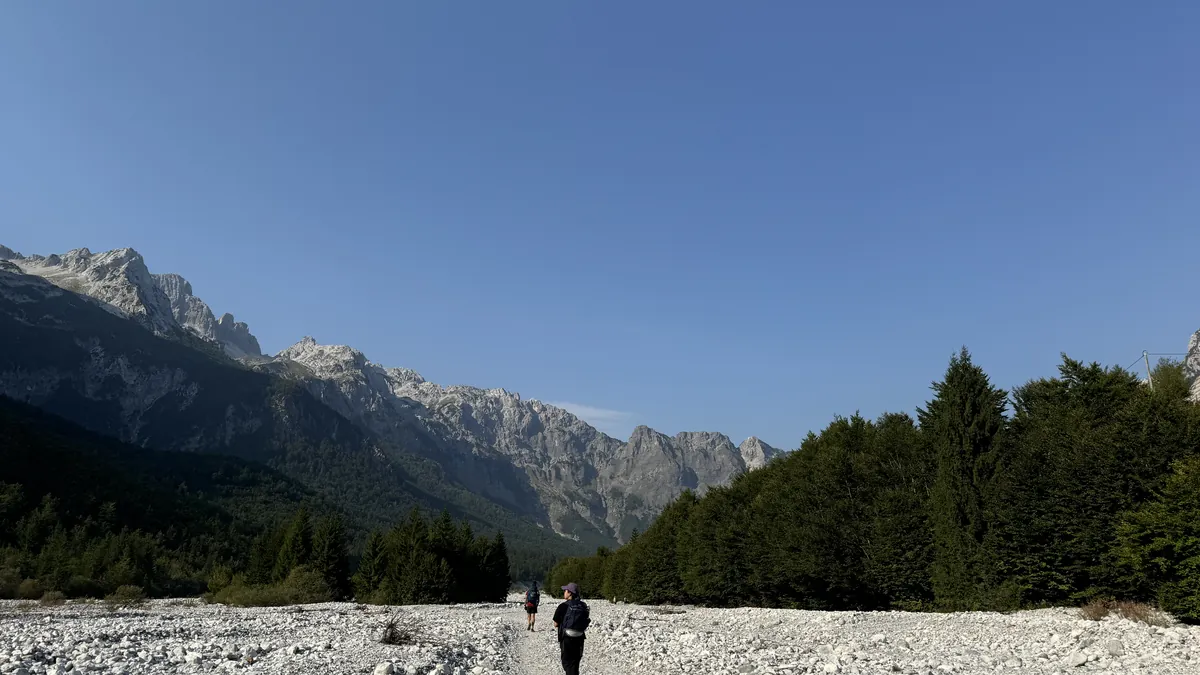
The 17-kilometer hike links the two isolated mountain communities. From the rocky floor of Valbona Valley, the path climbs steadily through pine forest and open alpine meadows toward Valbona Pass.
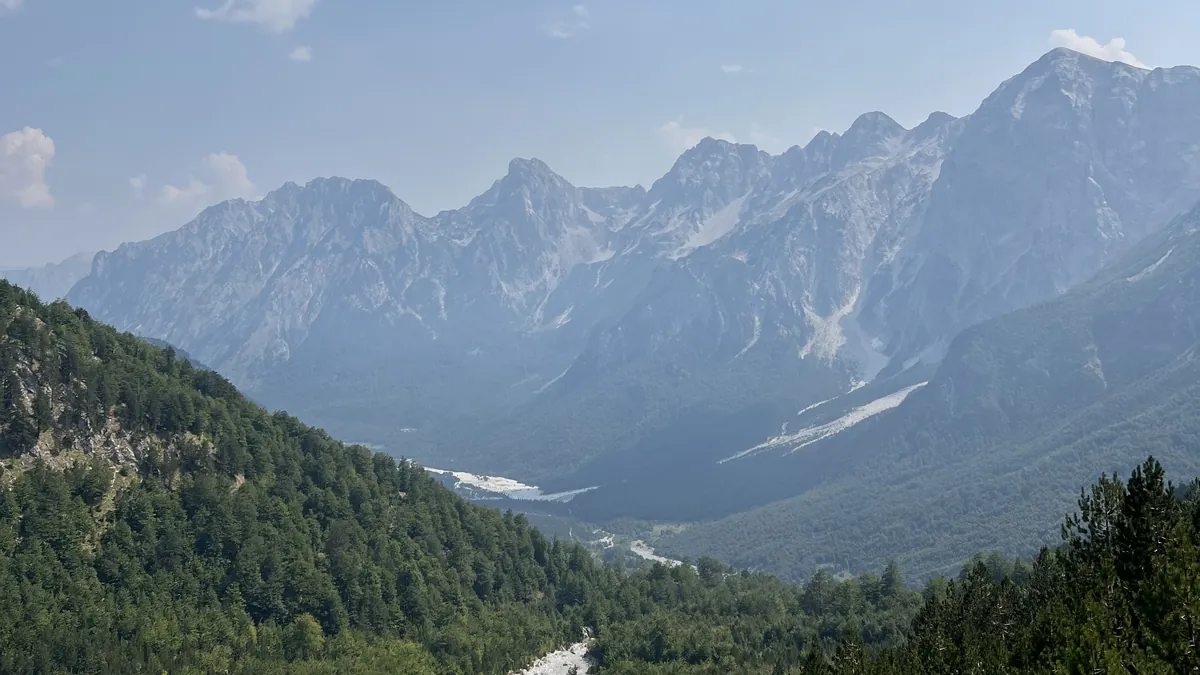
Reaching the 1,800-meter pass was both a physical milestone and a moment of pure awe. Sharp limestone peaks surround you and the view stretches across both valleys. The final descent brings you into Theth, a quiet mountain village of traditional wooden houses and stone lock-in towers (kulla).
Valbona to Theth trek at a glance:
-
•
Distance: about 17 km.
-
•
Duration: 7 to 8 hours for most hikers, depending on pace.
-
•
Maximum elevation: 1,800 m at Valbona Pass.
-
•
Best season: June to September, when snow has cleared from the high pass.
4. Unwinding at Himarë Beach.
Albania’s coast belongs to two seas. In the north, the Adriatic side has mostly sandy, gently sloping beaches around Durrës. In the south, the Ionian coast, known as the Albanian Riviera, runs about 120 km from Vlorë to Sarandë with rocky shoreline, limestone coves, pebble beaches and clear water. The SH8 road climbs over Llogara Pass (1,027 m) before the sea opens up below, and Himarë sits near the middle of the Riviera, with a walkable center and a small old town on the hill above.
The Albanian coast at a glance:
-
•
Coastline: roughly 380 km, though published figures range from about 320 to 480 km depending on how it is measured.
-
•
Adriatic coast (north): mostly sandy beaches with shallow, gentle water; Durrës has the best-known one.
-
•
Ionian coast (south): the Albanian Riviera from Vlorë to Sarandë, with pebble beaches and clear water.
-
•
Himarë: about halfway along the Riviera, with a beach several hundred meters long and an old town in the hills.
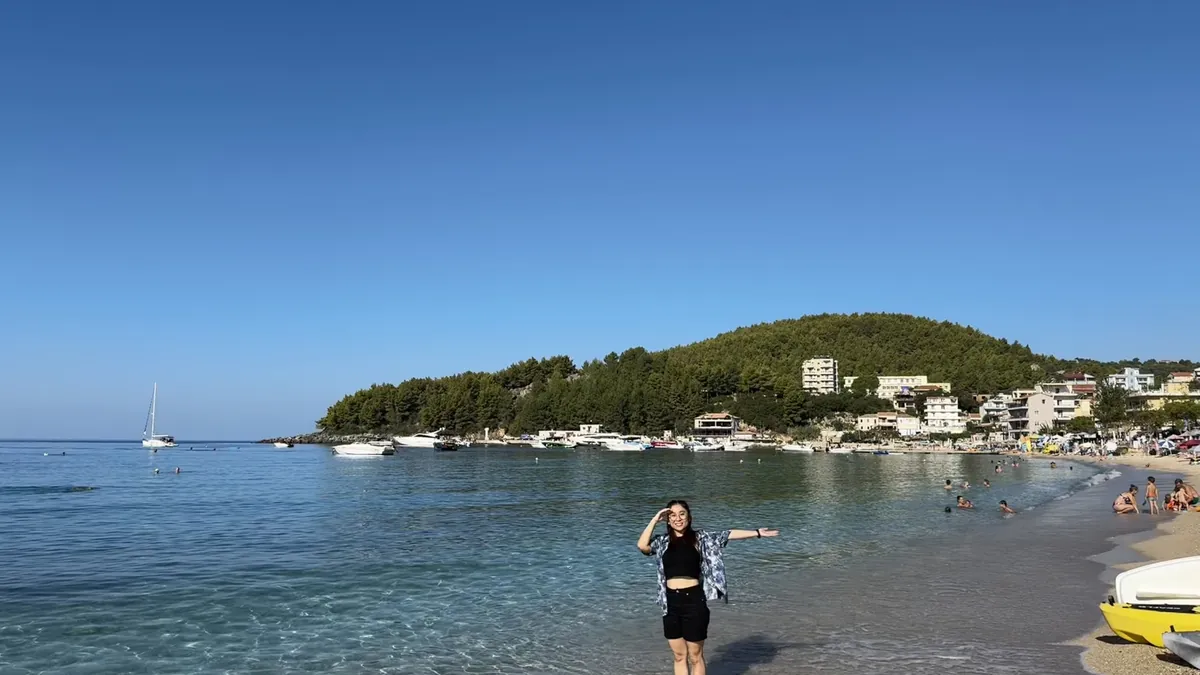
After the mountains, heading south to the Riviera gave me a completely different experience. Himarë has long pebble shorelines, clear Mediterranean sunlight and deep turquoise water, and in early September it did not have the overcrowded feel of typical European beach resorts.
5. What Albania Taught Me About Traveling Independently.
Albania has no smooth transport system or flawless infrastructure, and one careless data decision cost me about 50 EUR. Even so, the week was worth every unpredictable turn and remains one of my most cherished memories from Europe.
The main lesson is that a destination does not need heavy tourism promotion to be meaningful. Pick the place that fits the kind of trip you want. For me that meant trekking and discovering somewhere new, and Albania delivered exactly that. Every trip has its own meaning when it matches what you are looking for.